Direct Bookings for Hotels

Explore the Hotel Hub with practical guides, channels, and a newsletter to improve your hotel website step-by-step or get my exclusive consulting
Hotel Website Direct Booking Growth By Patrick Lindbichler
Most hotel websites do not lose bookings because the hotel is not good enough. They lose bookings because guests cannot find the answers they need, do not understand the value clearly enough, or do not feel confident enough to book directly.
This hub helps you fix those moments. You will find practical guides, frameworks, tools, and website assessment support to improve your homepage, room pages, booking funnel, Google visibility, AI search presence, and direct booking strategy.
I created these resources by combining my background in hospitality with more than eight years of leading SEO, AI, and content growth for an online travel platform with over 16,000 offers. After analyzing hundreds of hotel websites, I saw that the majority of hotel websites have missed opportunities to get significantly more direct bookings.
Based on how guests actually search, compare, and decide – not how most websites are built.
In these guides, you’ll learn how to:
Each issue breaks down one specific improvement you can apply immediately, so your website gets better step by step.
By following along, you will:
No overwhelm. No theory. Just one thing that makes a difference.
Don’t apply if you’re not ready to change your website. But if you are, you’ll turn it into a booking system you control – and see the results next season.
Together, we will:
Note: I only work with 5 hotels at a time to keep this hands-on.

If you want to understand how this could work for your hotel, we can walk through your website together and identify where you’re currently losing bookings.
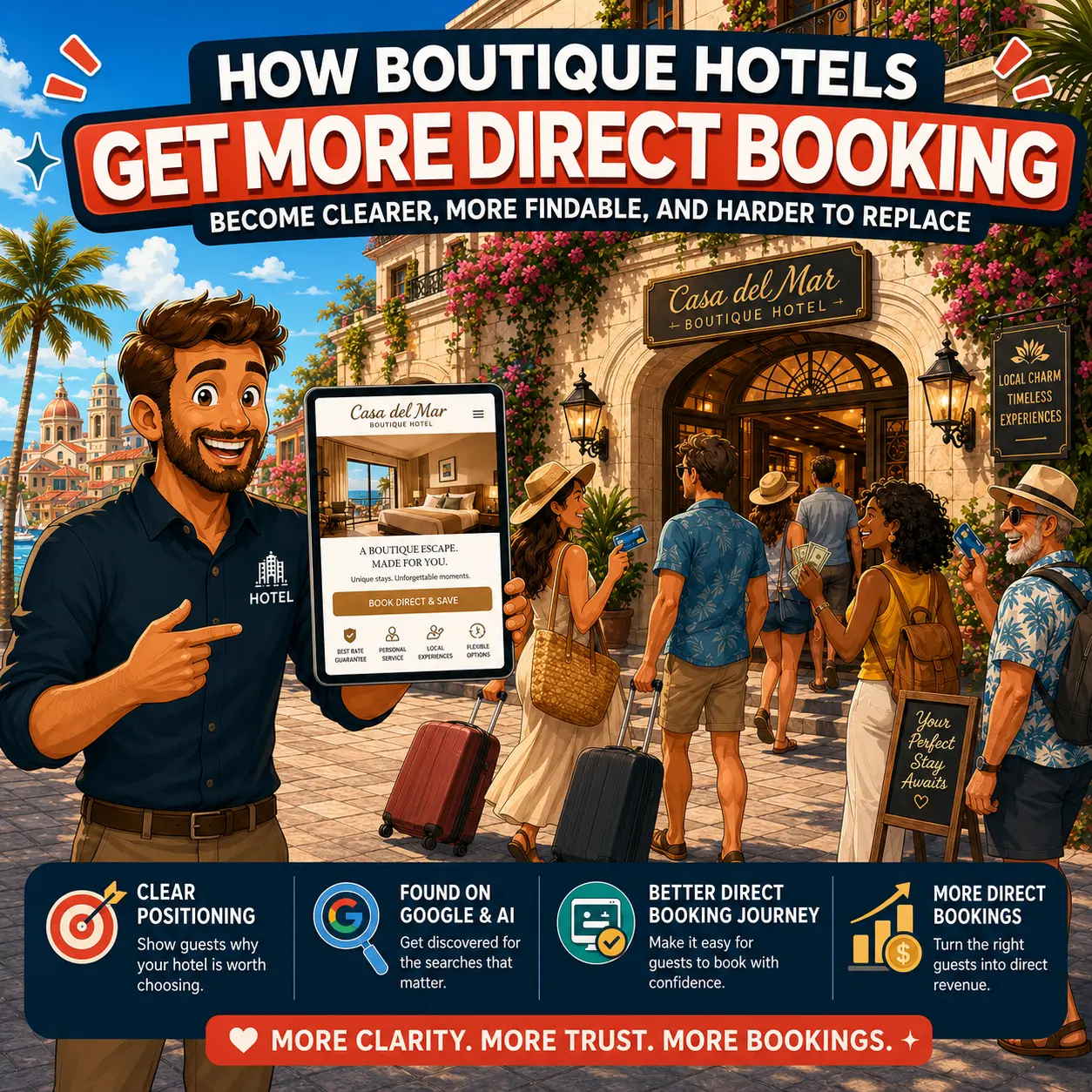
Strategic guides for hotels that want more bookings through their own website. Learn how to rely less on Booking.com and Expedia, improve your booking journey, position your hotel clearly, and build a website structure that supports direct growth.
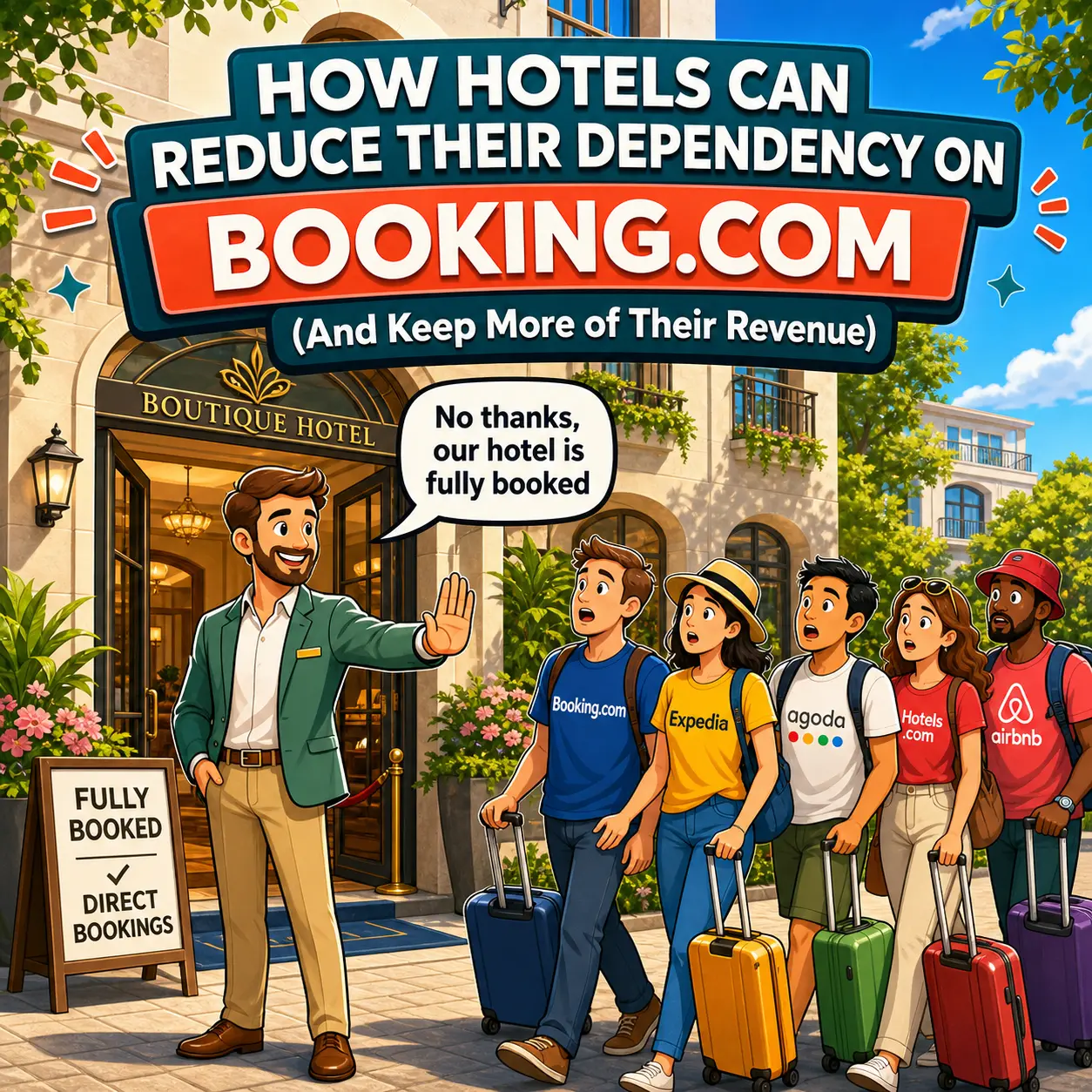
Learn how hotels can shift more bookings from Booking.com, Expedia, and other platforms to their own website with a clearer direct booking strategy.
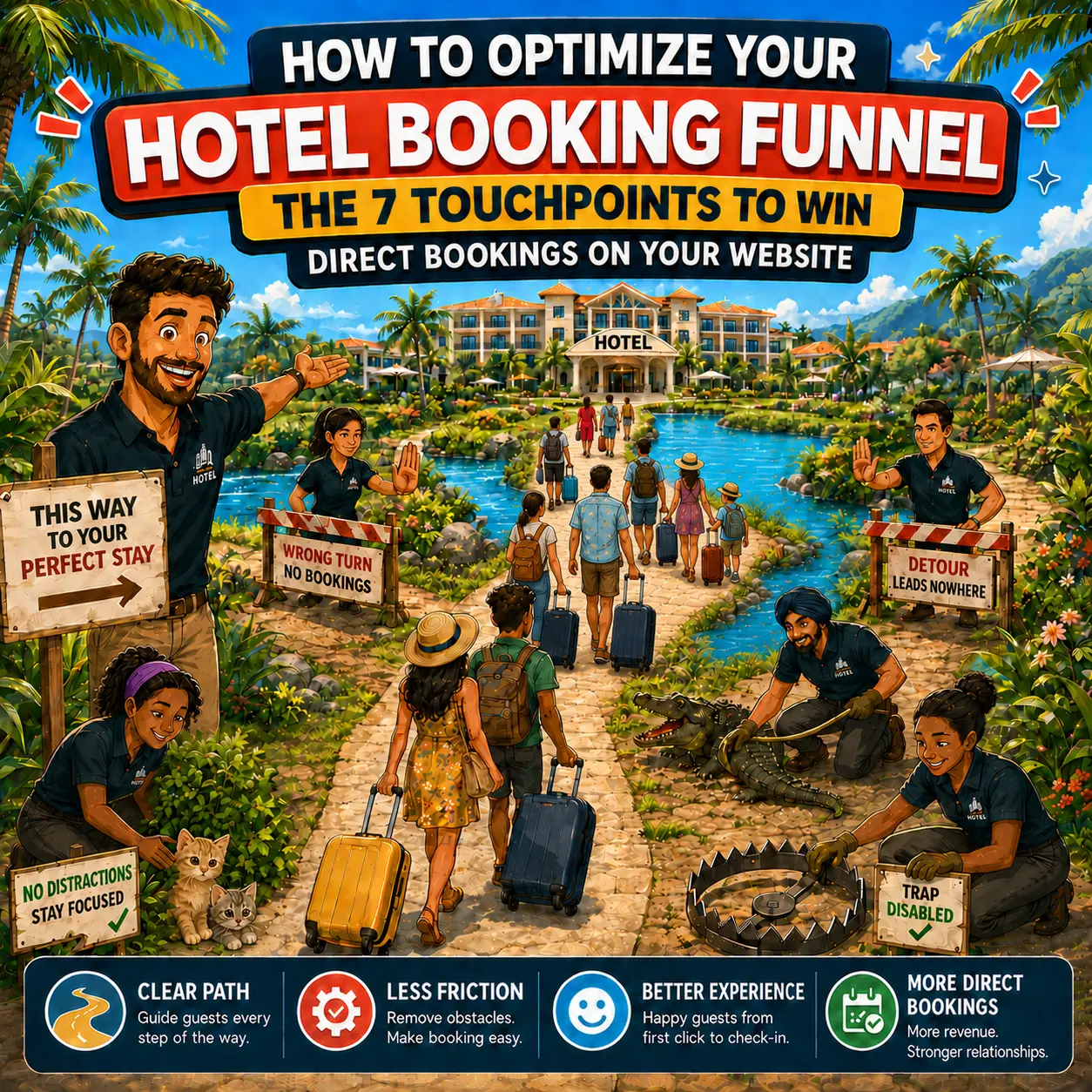
Improve the full path from first visit to confirmed booking, so fewer guests drop off and more complete their reservation directly.

Define what your hotel should be known for, so Google, AI tools, and real guests understand why your hotel is the right choice.
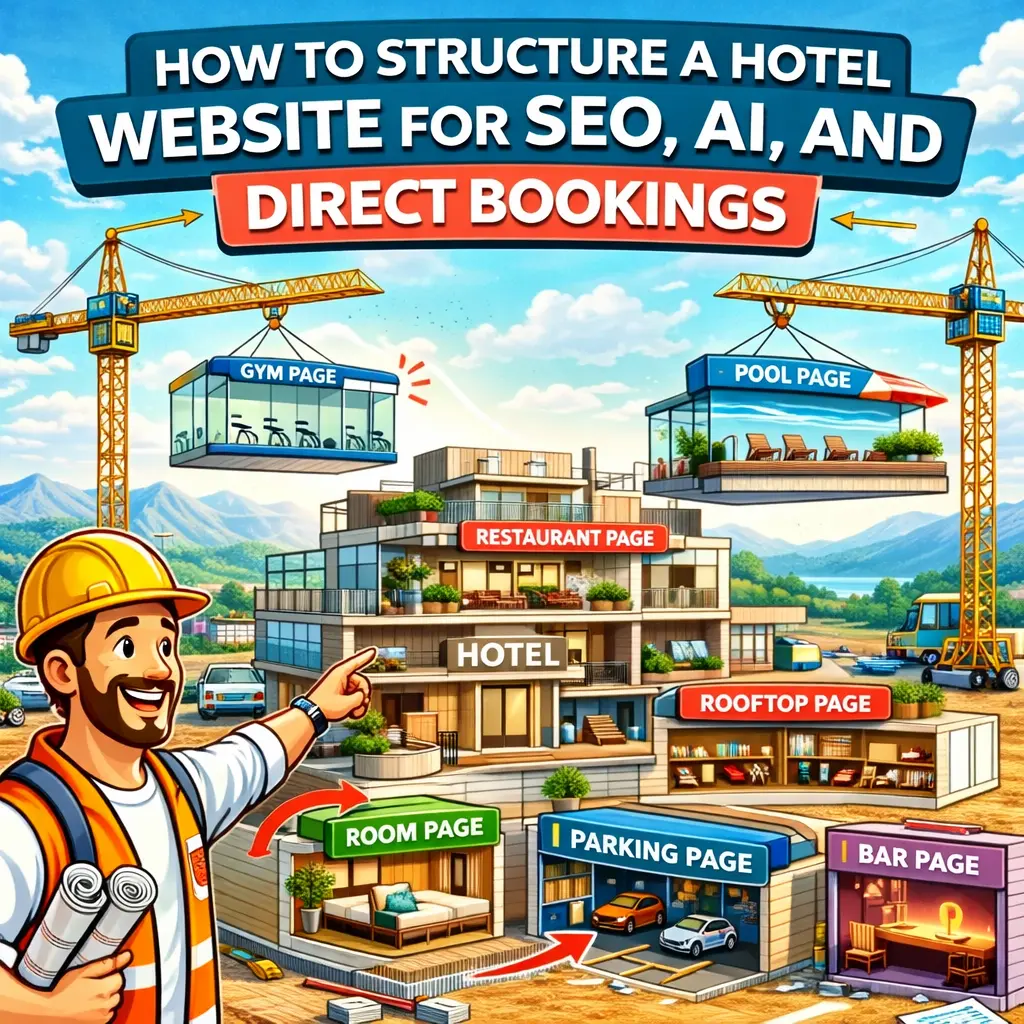
Build a website structure that helps guests find the right information faster and gives every important page a clear role in winning bookings.
Guides for hotels that want to increase their visibility before guests choose where to book. Learn how people search for hotels, how Google and AI systems understand your website, and how to create pages that show up for the right guests.

Learn how hotels can get found on Google, ChatGPT, and other AI tools and turn that visibility into more direct bookings.
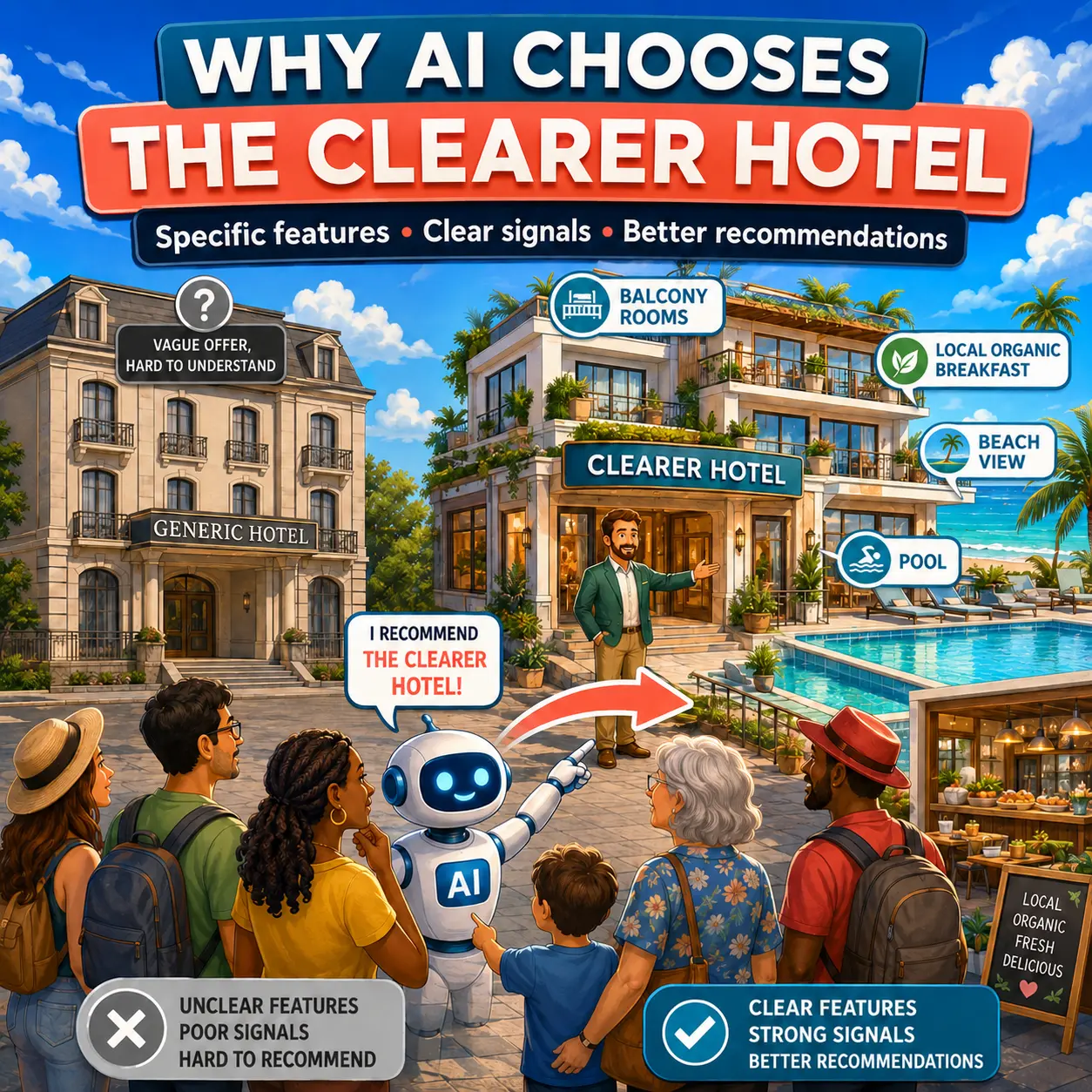
Understand how AI search is changing the way guests discover hotels, compare options, and choose where to book.
Find out what guests are actually searching for, so you can create hotel pages that match real demand instead of guessing..
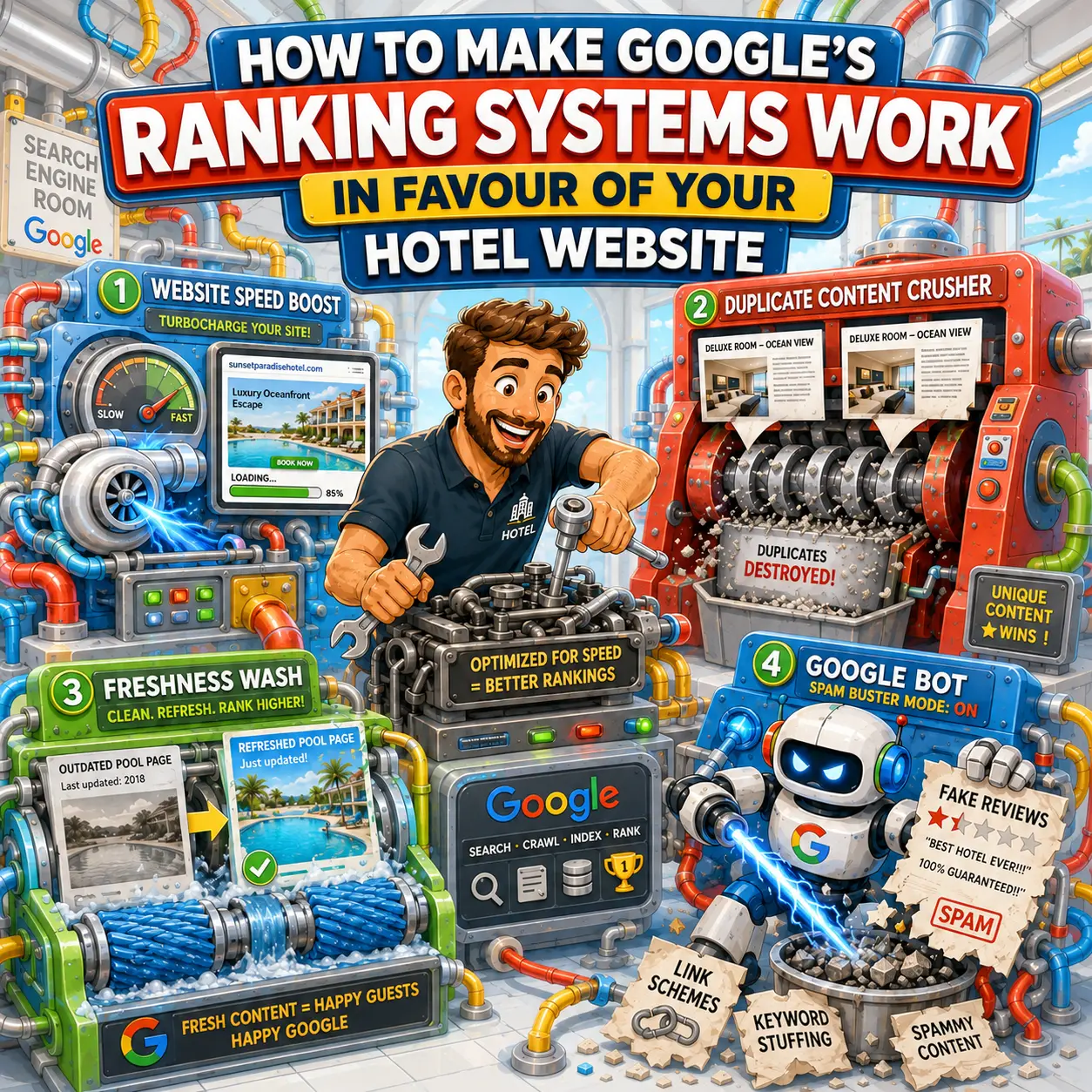
Learn the foundations that help hotel websites work better with Google’s ranking systems, from content quality to trust signals.
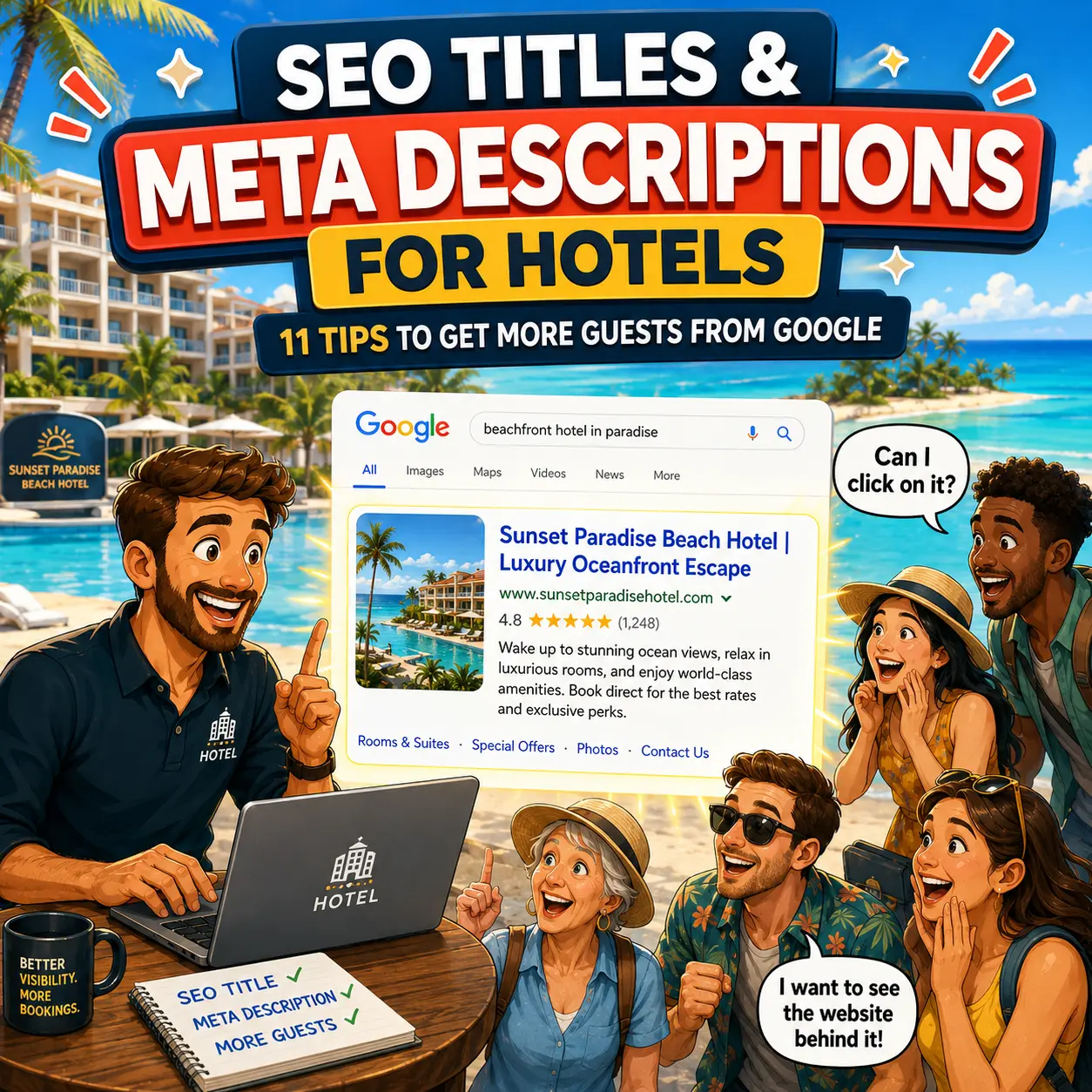
Write stronger SEO titles and descriptions that help your hotel pages stand out in search results and attract more qualified clicks.
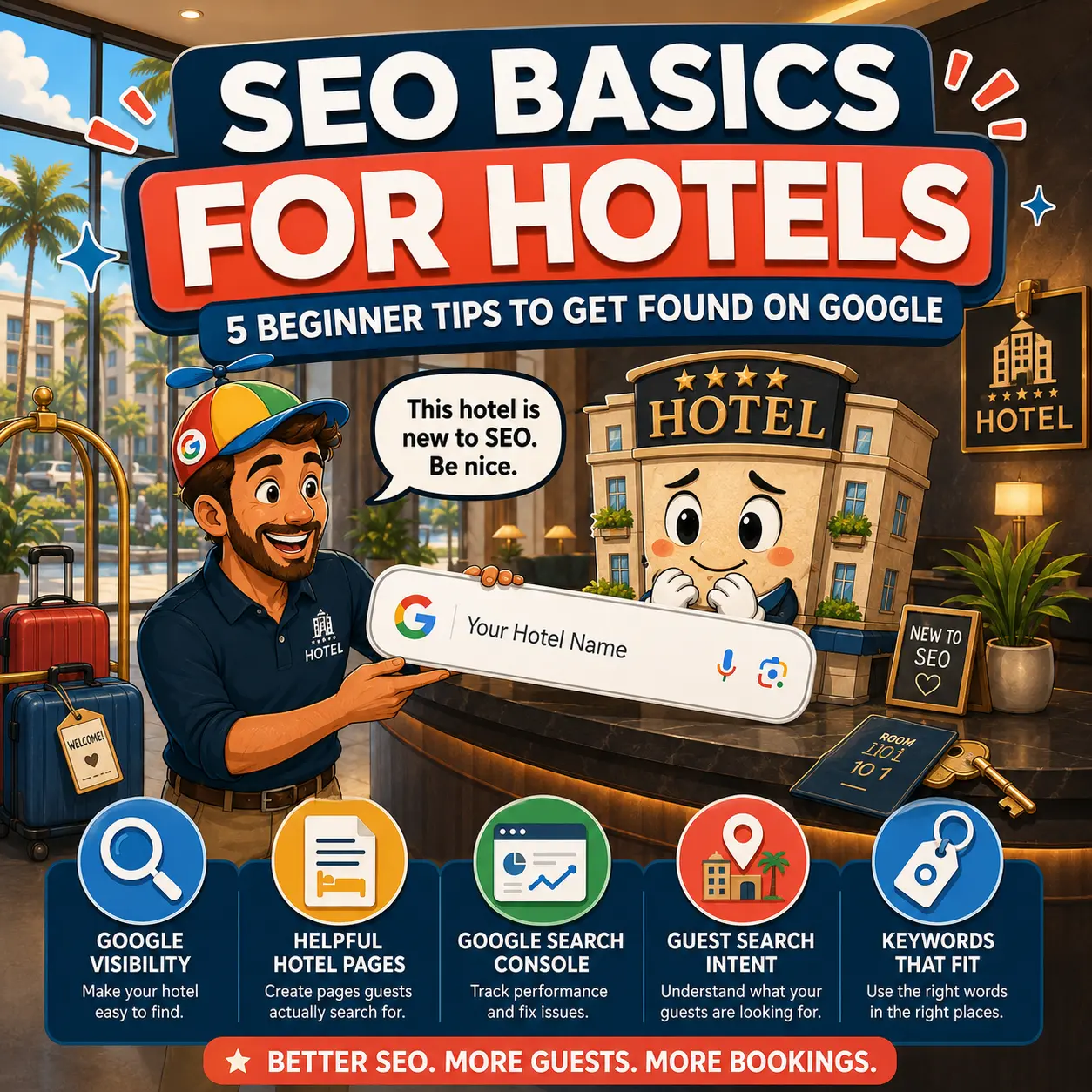
A simple starting point for hotel owners and teams who want to understand SEO without getting lost in technical jargon.
Practical guides for the pages guests check before they book. Learn what to show, what to explain, and how to turn important hotel pages into clear reasons to book directly.

Structure your homepage so guests understand your hotel quickly, see why it fits their trip, and know exactly where to go next.
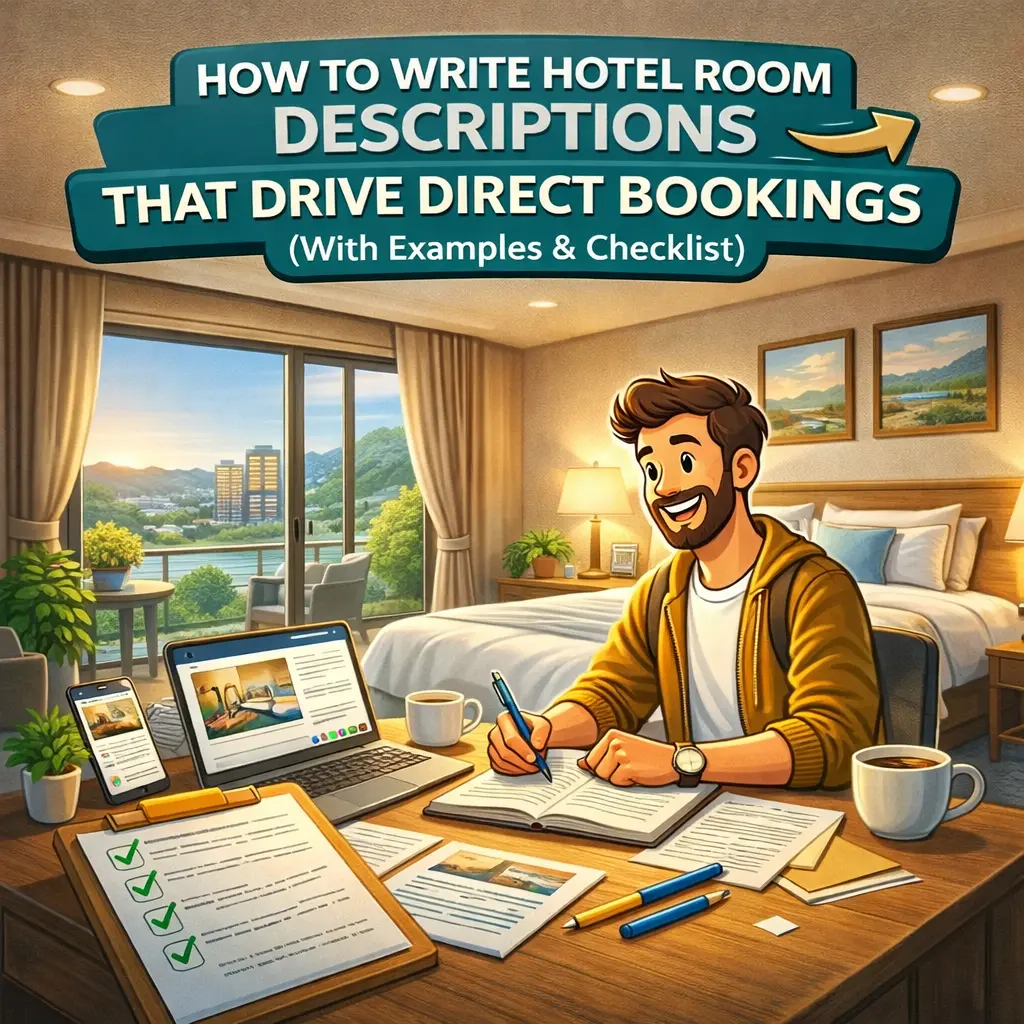
Write room descriptions that answer real guest questions about size, beds, views, comfort, and who each room is right for.
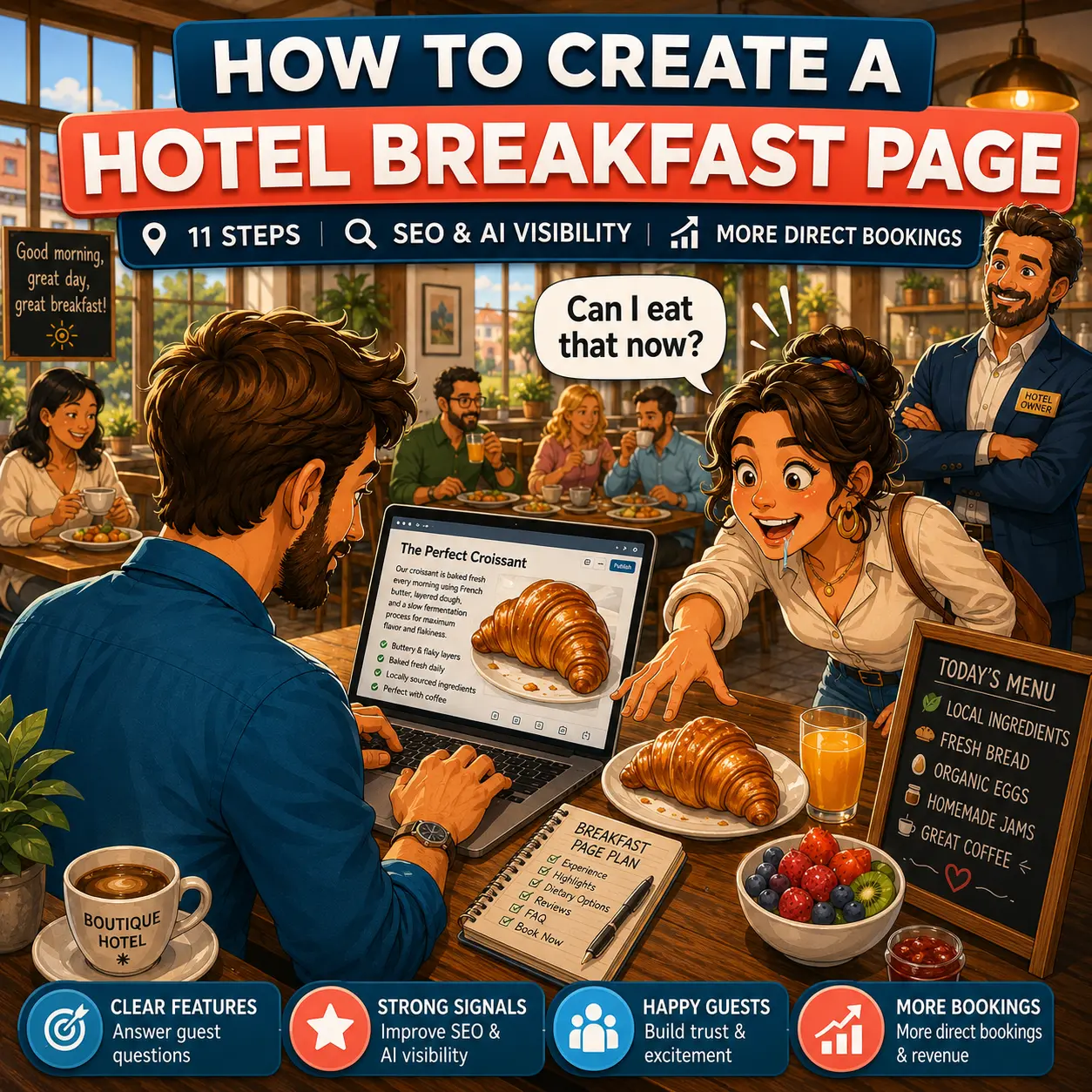
Create a breakfast page that shows guests what to expect, removes uncertainty, and turns your breakfast into a stronger booking reason.
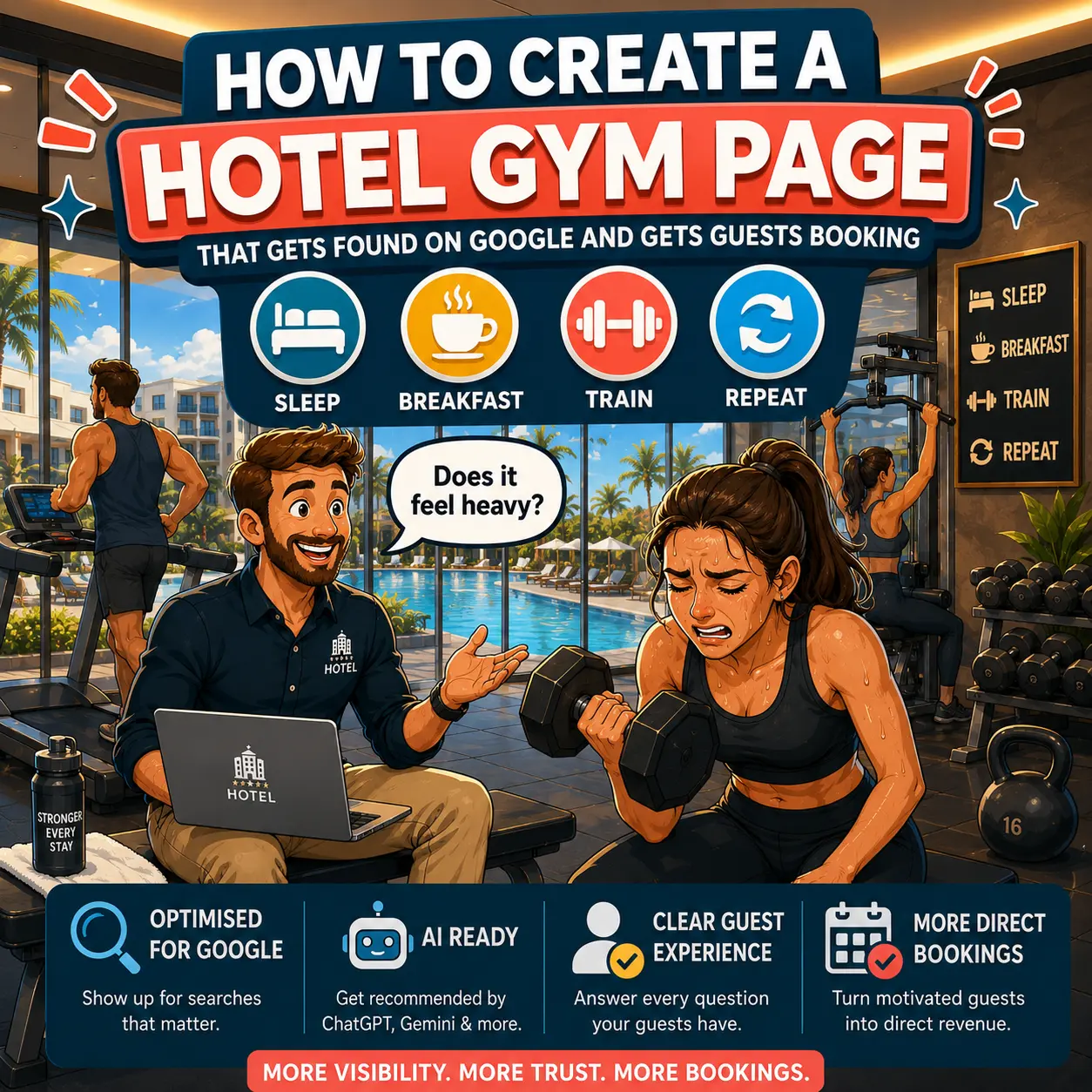
Build a gym page that answers practical questions, shows the value of your facilities, and helps fitness-focused guests book with confidence.
Most hotels don’t need more content.
They need the right structure, clarity, and systems.
That’s exactly what these guides help you build.
Q&A
Hotels get more direct bookings when their website does three things well: it gets found, builds trust and makes booking easy.
Getting found means your website appears when travelers search for hotels like yours on Google, AI tools and other search platforms. Building trust means your website clearly explains your rooms, location, amenities, reviews, prices, policies and guest experience. Making booking easy means visitors can check availability or contact you without confusion.
Many hotel websites lose direct bookings because they look nice but do not answer enough questions. Guests still have doubts, so they go back to Booking.com, Expedia, Google or ChatGPT to compare. A direct booking website should reduce that doubt before it becomes a lost booking.
The goal is not just more traffic. The goal is to turn more website visitors into direct guests.
Hotels reduce OTA dependency by making their own website more useful, more trustworthy and easier to book through than a platform listing.
OTAs are strong because they answer guest questions, show reviews, make comparison easy and create booking confidence. Your hotel website needs to do the same, but with one major advantage: you know your hotel better than any platform ever will.
That means your website should explain your rooms in detail, show real photos and videos, highlight direct booking benefits, answer practical questions and create dedicated pages for important amenities like breakfast, spa, parking, gym, family rooms or location.
You do not reduce OTA dependency by pretending OTAs do not exist. You reduce it by giving guests a better reason to book directly.
Hotel SEO means optimizing your hotel website so travelers can find it when they search on Google and other search engines.
This matters because most guests do not start by searching for your hotel name. They search for things like boutique hotel in Vienna, hotel near a landmark, family hotel with pool, hotel with parking or hotel with breakfast included. If your website does not clearly answer these searches, platforms and competitors will usually appear instead.
Good hotel SEO connects your hotel’s real strengths with the way guests search. It helps your website appear for relevant searches, attract better qualified visitors and create more opportunities for direct bookings.
SEO is not just about rankings. For hotels, strong SEO should support revenue by bringing the right guests to the right pages at the right moment.
Guests usually search based on needs, not hotel vocabulary.
They search by location, such as hotel near Schönbrunn Palace, hotel in Vienna city center or hotel near the train station. They search by feature, such as hotel with spa, hotel with parking, hotel with balcony or hotel with gym. They search by audience, such as family hotel, romantic hotel or business hotel. They also search by experience, such as boutique hotel, wellness hotel or quiet hotel for a weekend trip.
That is why a hotel website should not only describe the hotel in general terms. It should create clear pages around the specific reasons people might choose it.
When you understand how guests search, you can structure your website around real demand instead of guessing what people want.
Hotels can increase their chances of appearing in AI search results by making their information clear, accessible, specific and supported by trustworthy sources.
AI tools like ChatGPT, Gemini, Claude and Perplexity need enough context to understand when your hotel is a good recommendation. Your website should clearly explain what kind of hotel you are, where you are located, who your hotel is best suited for, what features you offer and why guests choose you.
But AI tools also look for confidence. That means your claims should be supported by external signals such as reviews, Google Business Profile, Tripadvisor, travel articles, local directories, partner websites and other trusted sources.
The simple rule is this: your website creates clarity, while independent proof creates confidence. If both tell the same story, your hotel becomes much easier to recommend.
Every hotel website should start with the pages closest to the booking decision.
The essentials are a strong homepage, clear room pages, a contact page, an about page and an easy booking path. After that, hotels should create pages for the features and questions that matter most to guests. This often includes breakfast, spa, gym, parking, restaurant, family rooms, business travel, location, nearby attractions, transport access and special offers.
The most important rule is: one important guest need should have one clear place on your website.
If guests search for your breakfast, create a breakfast page. If parking is a major concern in your area, explain it properly. If your location is a big advantage, build a strong location page. Clear pages help guests, Google and AI tools understand why your hotel is the right choice.
A great hotel room page should help guests understand exactly what they are booking.
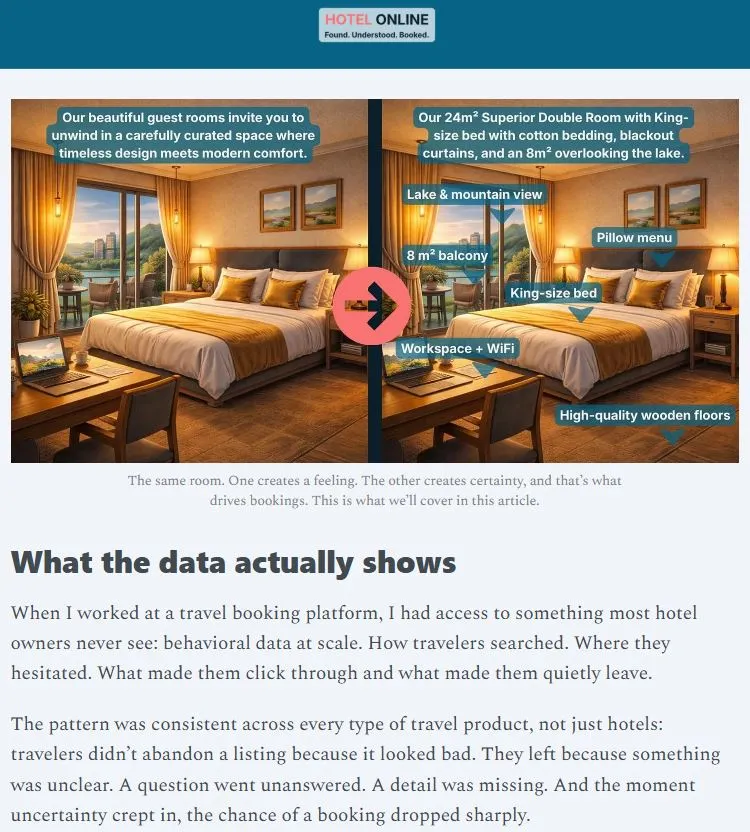
It should include the room size, bed type, bathroom details, view, key amenities, photos, video if possible, what is included, what is available on request, what is not included and who the room is best suited for. It should also answer practical questions like whether the bed is a real double bed, whether the balcony is private, whether the room faces a quiet area, whether there is a desk and whether an extra bed is possible.
Many hotels lose bookings because their room pages are too vague. Guests should not have to guess what “Superior Room” or “Deluxe Room” actually means.
The goal of a room page is simple: help the right guest think, “Yes, this is exactly the room I want.”
Hotels should create dedicated pages for important amenities because guests search for them and use them to decide where to book.
A short mention on the homepage is often not enough. If breakfast is one of your strengths, guests want to know what is served, when it is available, whether it is included, whether dietary options exist and what makes it special. If you have a gym, guests want to know what equipment is available, when it opens, whether towels are provided and whether it is included. If parking is difficult in your area, guests want clear instructions before they book.
Dedicated amenity pages help your hotel get found for more specific searches. They also reduce uncertainty, increase trust and give guests more reasons to book directly.
A strong amenity page does not just describe a feature. It turns that feature into a booking argument.
A hotel homepage should make the hotel instantly understandable and guide guests toward booking.
At the top of the page, guests should quickly understand what kind of hotel it is, where it is located, who it is best for and why they should stay there. The homepage should also include a clear booking button or availability check above the fold.
After that, the homepage should show the most important reasons to book: rooms, location, amenities, guest reviews, direct booking benefits, personal story and links to key pages. It should feel like a helpful hotel lobby, not a confusing brochure.
A homepage does not need to explain everything in full. Its job is to create confidence and send guests to the next useful step.
I help hotels turn their website into a clearer, stronger and more profitable direct booking channel.
That means I look at how guests find your hotel, what they see on your website, where they lose trust and where they leave the booking journey. Then I help you improve the pages, content, structure, search visibility and booking path that influence direct bookings.
The benefit is simple: more guests should find your hotel directly, understand why it fits their trip and feel confident enough to book through your website instead of an OTA. That can increase revenue because direct bookings usually mean lower commission costs, stronger guest relationships and more control over the full booking journey.
My work combines hotel SEO, AI search optimization, content strategy, website clarity and conversion thinking. The goal is not just a nicer website. The goal is a hotel website that gets found, gets trusted and gets booked directly.
The blog is your destination for valuable insights, expert tips, and inspiration on all things marketing, branding, and business growth. Stay updated with the latest trends and strategies to help your brand thrive in a competitive market.
Navigate
Language
Contact
I’m based in Vienna, Austria. You can connect with me on LinkedIn or send a message through the contact section.
Google ADS Certified

© Patrick Lindbichler 2026 | Legal Disclosure (Impressum)
